


🔇 See how vibrations are removed with ProSilence!
This short video shows how the ProSilence system decouples and eliminates unwanted vibration noise. The clips are made from the same specially developed silica gel as our U-boats.
📄 Technical whitepaper
Download our comprehensive documentation created by our civil engineer Eivind Lygren:
👉 Click here to download the whitepaper

Eivind Lygren, siv.ing bygg
🌟 DreamScreen ProSilence FluxCore 🌟
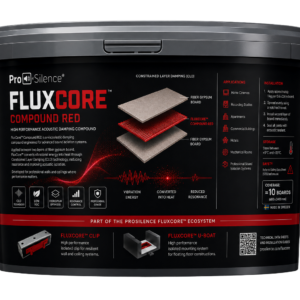
DreamScreen ProSilence FluxCore is our latest and patent-pending generation of sound insulation clips – designed to dramatically improve decoupling in the deepest frequencies. The unique multi-layered core utilizes materials of different densities, with the innermost layer consisting of an extremely soft material with a very low natural frequency. This material sets even the very lowest octaves (10-20 Hz) in motion and emits significantly more energy, delivering unprecedented performance in bass and sub-bass isolation.
🔍 What does FluxCore mean?
FluxCore is ProSilence’s common technology platform for controlling vibration energy in building structures. Rather than focusing on a single frequency or an isolated solution, FluxCore is designed to control how energy flows through the structure as a whole – from low frequencies and heavy loads, to higher frequencies and more complex resonances.
At the heart of FluxCore technology is a controlled combination of flexibility, mass and load-bearing capacity, providing:
-
Optimal decoupling over a wide frequency range – not only in the midrange, but also where structure-borne sound and bass energy are most difficult to control
-
Lower natural frequency in the system – providing significantly better performance in the low frequency range, often below 80 Hz
-
High mechanical capacity – FluxCore is designed to withstand very heavy installations without losing decoupling power
-
Predictable energy dissipation – vibrations are dissipated in a controlled manner and converted into heat, instead of propagating further in the structure
-
Large mounting margin – the technology provides increased tolerance for heavy components such as projectors, speakers and modular constructions
FluxCore is not a single product, but a system principle. For best function, the technology requires sufficient mass and correct loading, and it is therefore always recommended to use a minimum of two layers of heavy plates in structures where FluxCore is used.
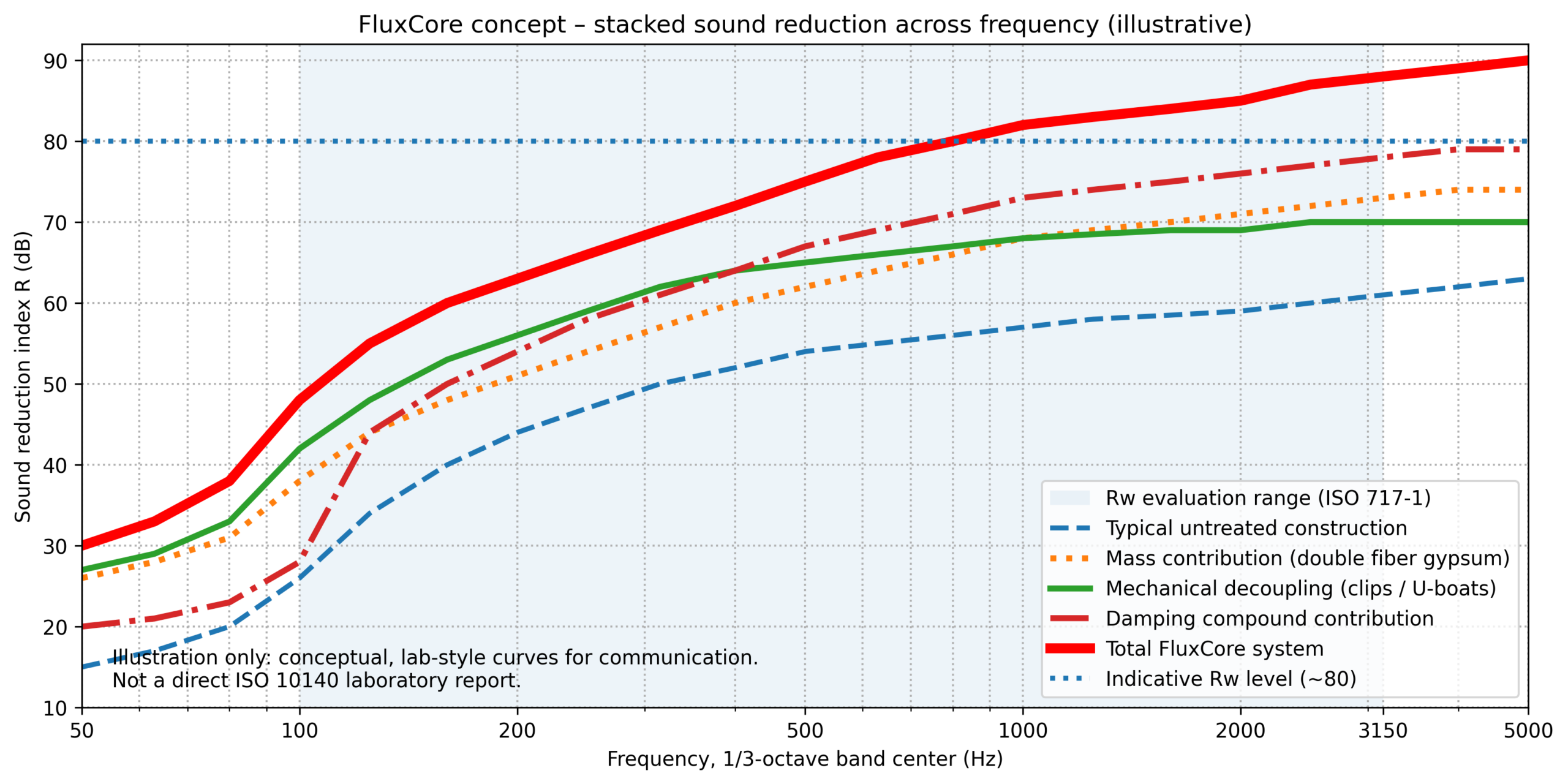
Illustrative frequency graph showing how the FluxCore system builds sound insulation through the interaction of mass, mechanical decoupling and internal damping.
In the low-frequency range, mechanical decoupling (clips and U-boats) dominates together with increased mass from double layers of fiberglass plaster, while damping compound primarily contributes in the medium and high-frequency range. The sum of these mechanisms results in a stable and high overall sound reduction, with typical Rw ≈ 80 dB in the evaluation range (100-3150 Hz). The curves are conceptual and intended to illustrate the principles behind the FluxCore platform.
⚖️ ProSilence FluxCore vs. traditional sound hoops
Traditional sound hoops essentially act as a mechanical spacer between the stud and the substrate, with a relatively stiff elastic element. They can provide some reduction in mid and high frequencies, but have limited effect in the bass range, where structure-borne sound, bass energy and heavy step sound are perceived as most annoying.
The reason is that sound barriers have relatively high dynamic stiffness, which means that the system’s natural resonance often ends up in the 40-90 Hz range. In this frequency range, low-frequency energy will largely propagate further in the structure – and in some cases be amplified.
ProSilence FluxCore, on the other hand, is designed as a spring-based decoupling system, not a rigid elastic element:
-
Patent pending multi-density core with materials in different resonance ranges
-
Extremely soft inner core that sets in real spring movement under load
-
The system’s natural resonance moved down towards 10-20 Hz
This means that ProSilence FluxCore provides effective decoupling even in the critical low-frequency range, where traditional sound barriers in practice have little or no effect.
The result is a construction that:
-
Reduces low-frequency structure-borne sound and bass coupling
-
Significantly improves performance when installed in a suspended ceiling, with reduced impact sound
-
Provides a far better match between measured and perceived sound insulation
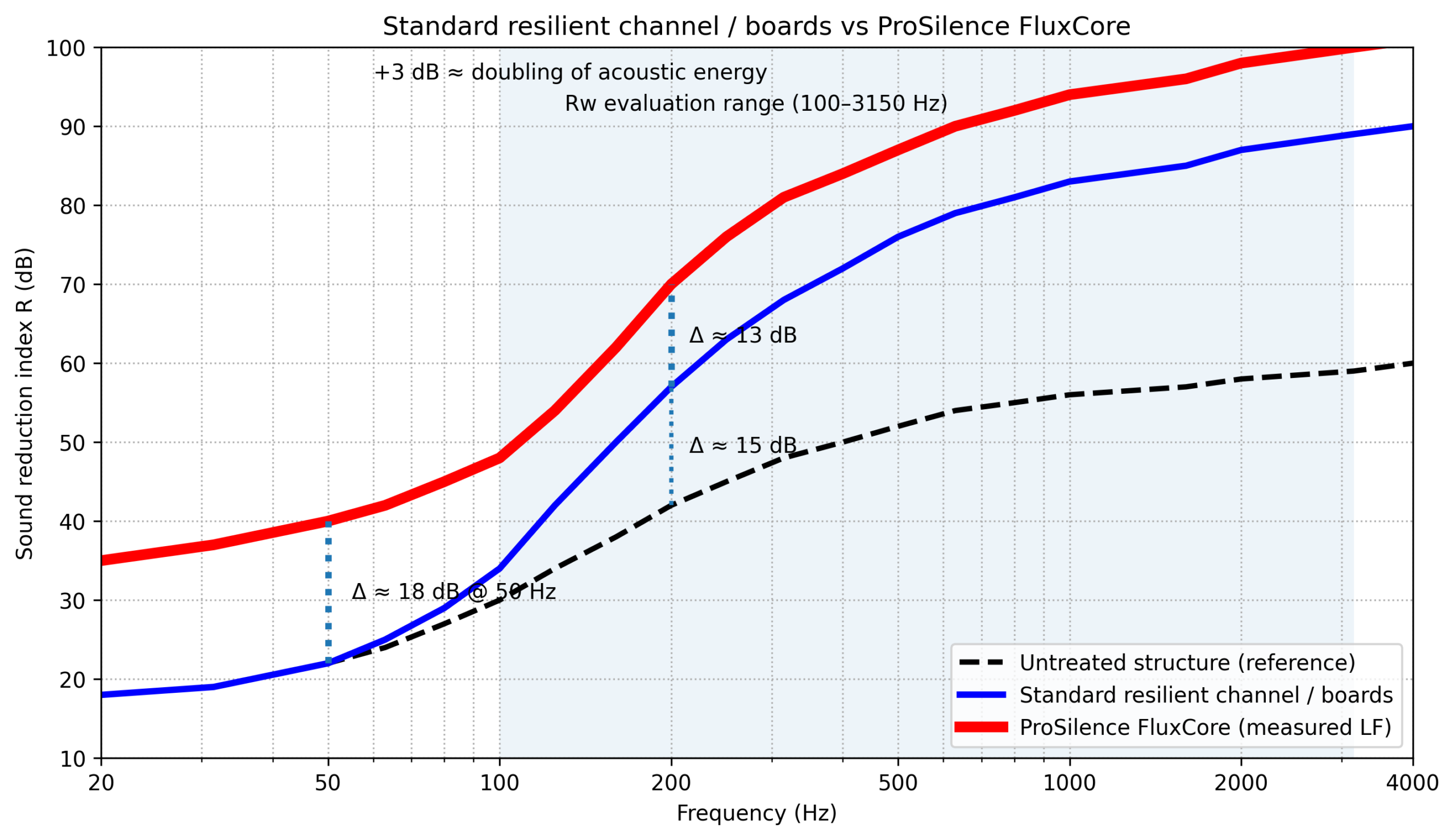
This graph shows the typical effect of a spring-coupled approach used by our U-boats and vs. a typical solution based on step sound plates
🔍 What’s new with the FluxCore Clip?
- Multi-density core – optimal decoupling in the ENTIRE frequency range
- Lower natural frequency – much better performance below 80 Hz
- Extreme load capacity – as much as 70 kg per clip
- Allows up to four layers of fiberglass plaster in extremely heavy installations
- Significant mounting buffer for projectors, speakers and heavy modules
- It is recommended to use at least two layers of fiber gypsum for optimal weight loading of the FluxCore decoupler
The multi-density based FluxCore core lowers the system’s self-resonance and provides up to 15-20% improved isolation in the lowest frequencies compared to previous generations. Despite the soft inner core, FluxCore delivers an extreme load capacity of 70 kilograms per clip, enabling both heavy tile layers and mounting speakers and projectors directly into the ceiling without risk.
⚙️ Easy installation
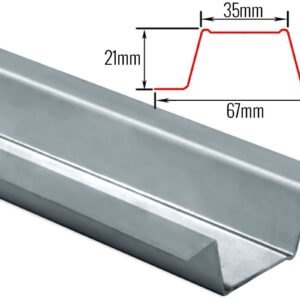
Quickly installed in both ceilings and walls. The steel part is attached first, then the FluxCore core is pressed in together with the steel stud. Remember to use the studs recommended under “Accessories”.
📌 Advantages
- Only 3.4 cm building projection 📏
- Multi-density gel core for maximum vibration damping
- Tested and fireproof construction
- Long service life and very easy installation ⚡
🎯 Result: Significantly quieter rooms, better acoustics and a more professional installation – especially in home theater, studio and projects where bass control is critical.
📎 Data sheet

🎥 Extra video: Installation and principle
🏭 Information from the manufacturer
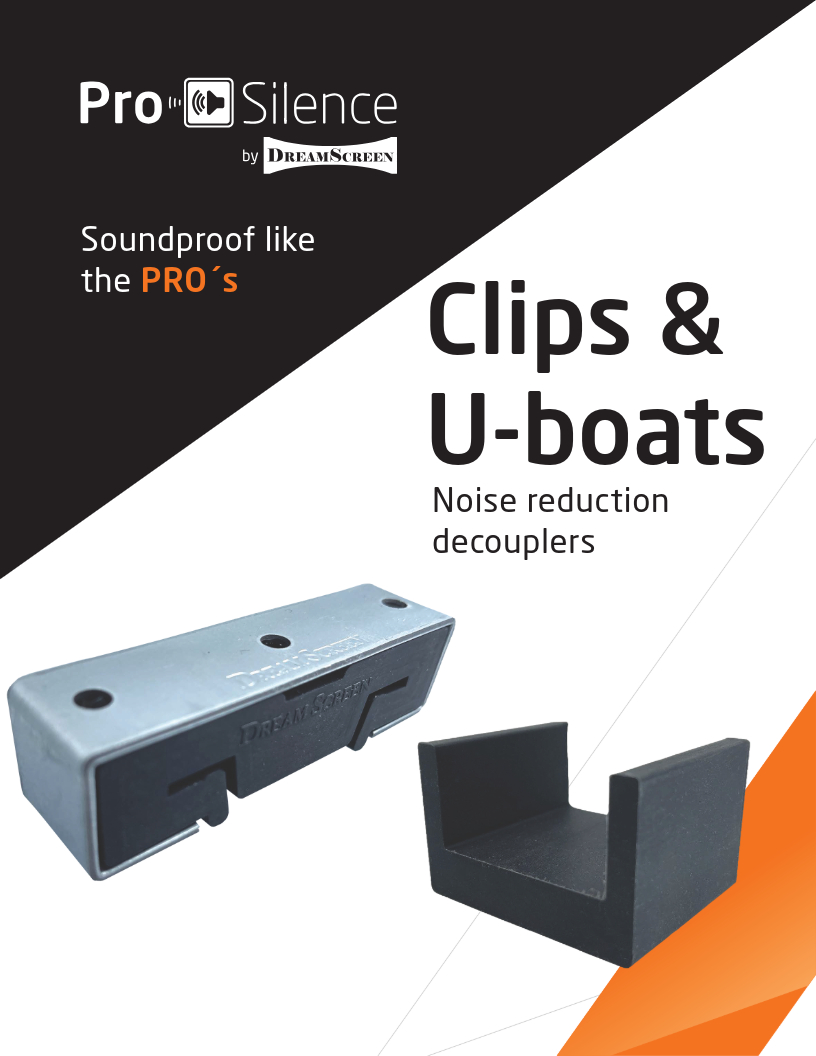
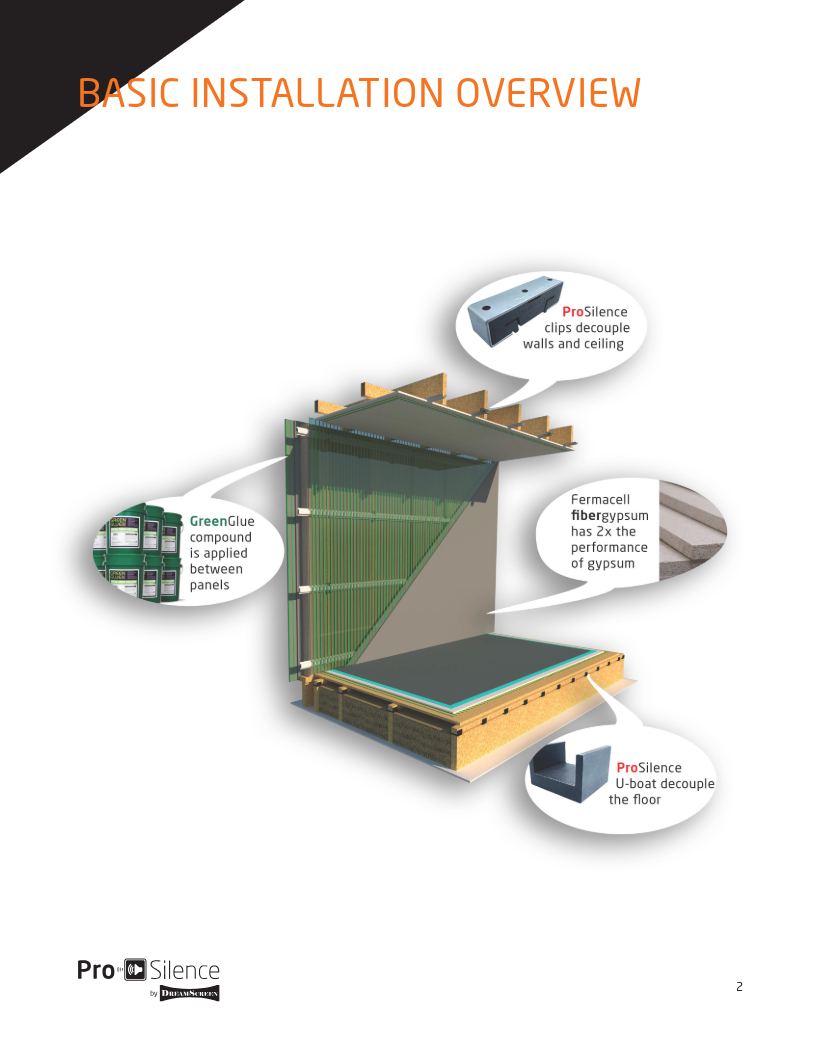
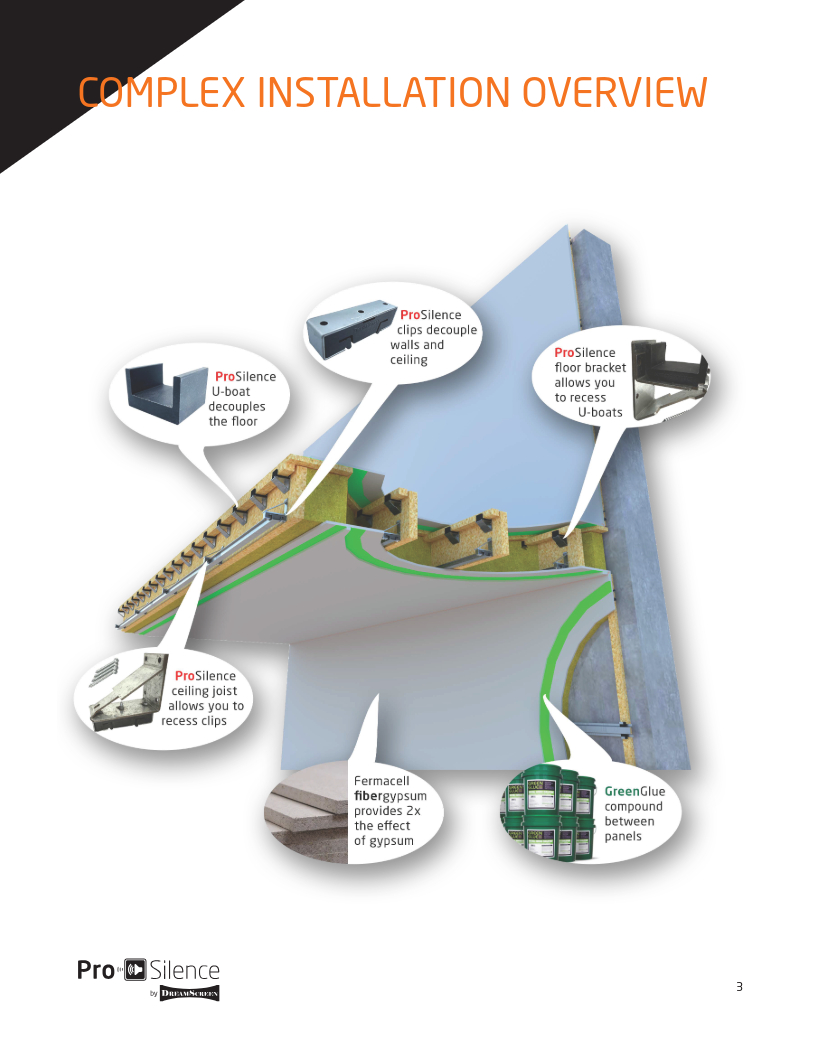
If you are looking for the best possible reduction of noise generated from your cinema room, recording studio, or similar, there is simply no way around decoupling the floor, walls, and ceiling.



Reviews
There are no reviews yet.