
Materials & measurement · Research perspective
Sound isolation, designed for the long term
Why ProSilence chooses high-purity silica gel: chemical stability, resistance to common polymer ageing mechanisms and deliberately loaded support points.
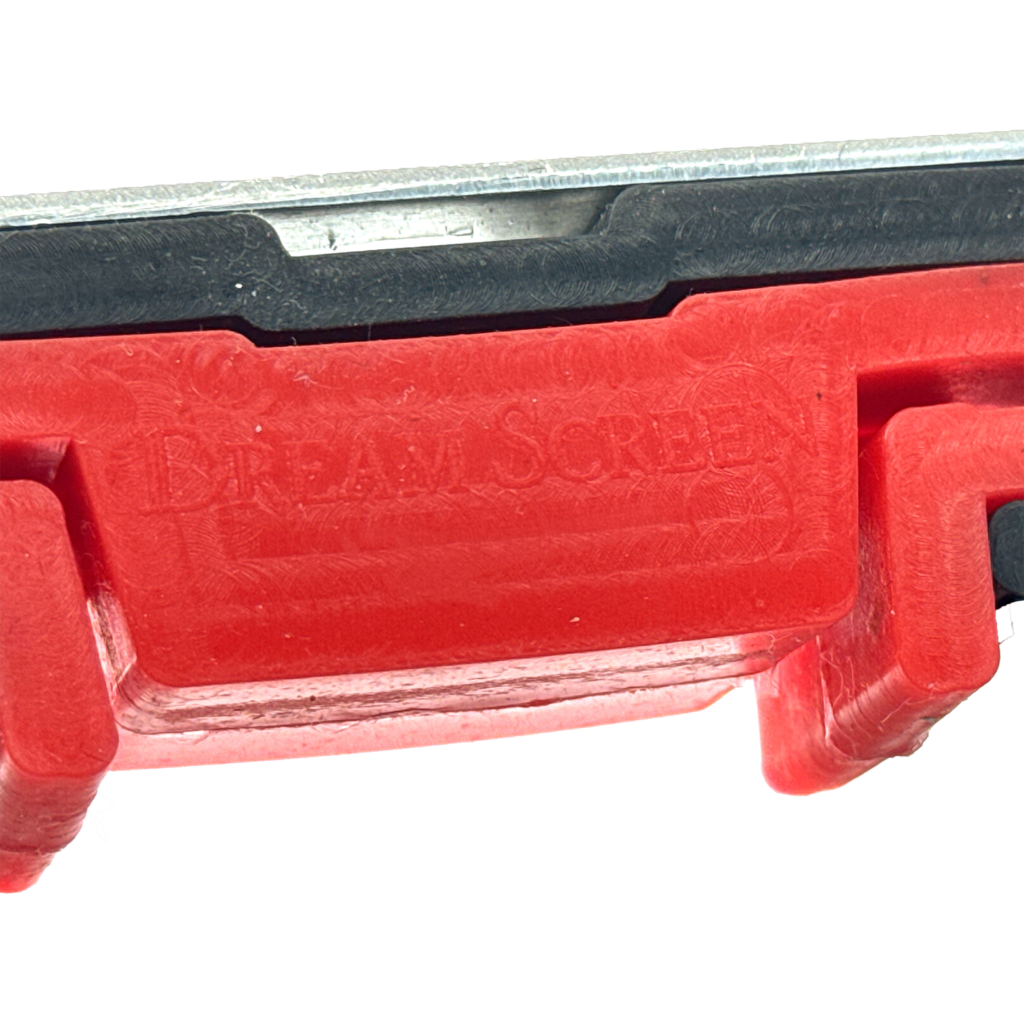
A resilient connection is a loaded spring. Its job is to remain useful after the plasterboard is installed, the room is finished and years of service have passed.
Long-term sound isolation starts with material selection. ProSilence uses a high-purity silica-gel composition in different densities, combined with defined support points in FluxCore. The reason is practical: a concealed connection should retain its spring action throughout years of use. Recent acoustic research and established material science explain why resistance to ageing matters.
01 / New research · September 2026
Time and load belong
in the same test.
Five years under compression
Buildwise researchers monitored eight resilient underlay materials for more than five years, using 200 × 200 mm specimens. Their work shows why initial apparent dynamic stiffness and its evolution under sustained loading should be considered together. One recycled polyurethane foam was also tested with the loading plate increased from 8 kg to 16 kg. [1]
The paper reports larger changes in stiffness at the higher load. It combines long-duration measurements with model-derived estimates, so its projections need to be read in that context. Its practical message is clear: the material and its working load affect how a resilient layer develops over time.
Preserve the spring.
Start with the material.
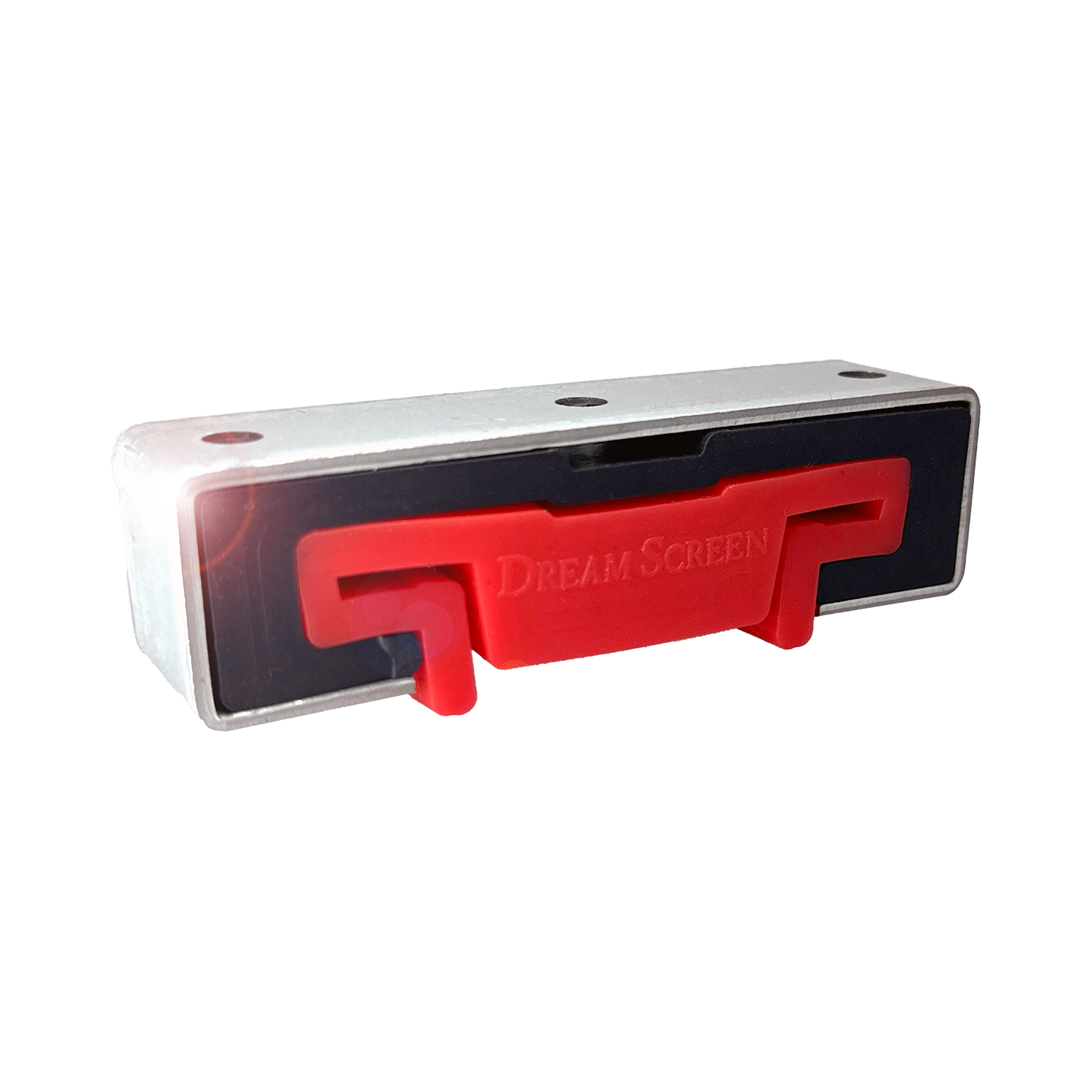
Our design approach is to combine a chemically stable material base with controlled loading. Silica gel provides an inorganic starting point; the different densities and defined FluxCore geometry let us tailor the support to its intended role.
Material chemistry and support geometry are complementary parts of the design.
02 / Material selection
Silica gel.
Different densities.
ProSilence uses a high-purity silica-gel composition in different densities in the FluxCore core. Silica gel is based on inorganic silicon dioxide, SiO₂. Merck’s safety data for silica gel describe it as chemically stable under normal ambient conditions and non-combustible. This gives the material choice a concrete chemical basis. [4]
The silica structure itself does not contain the organic polymer chains involved in several familiar ageing mechanisms in rubber and polyurethane. Our engineering assessment is that this offers a favourable basis for long-term chemical stability. The distinction is resistance to those mechanisms in the silica base, rather than a numerical lifetime claim for the finished clip.
Why rubber can harden. Oxidation and additional crosslinking can make rubber compounds harder and more brittle; loss of plasticisers can also reduce elasticity. Liu and colleagues documented these mechanisms in accelerated thermal ageing of HNBR. The experiment used elevated temperatures, but it identifies why the composition matters. [5]
Why polyurethane chemistry matters. Prolonged hot, wet exposure can break down polyester-based polyurethane through hydrolysis and reduce its mechanical properties. BASF documents much greater hydrolysis resistance in polyether grades, and good stability at room temperature in stabilised polyester grades. Ageing can mean hardening, softening or loss of strength; the formulation and environment determine the outcome. [6]
03 / The ProSilence approach
Defined points.
Deliberate loading.
Discrete resilient connections make the load path explicit: the supported mass, the number of connections and their spacing can be considered together.
Conceptual load-path illustration. Not a construction detail or a performance comparison.
In FluxCore, the material acts at defined connection points instead of across a continuous mat. This makes the supported mass and the number and spacing of clips explicit design choices. Different densities and the support geometry work together to control deformation and spring action.
The practical advantage is a controlled load path: each connection can be selected and positioned for the mass it supports. Load, contact area and geometry still belong together, as supplier data for resilient supports also demonstrate. Chemical stability addresses the material; point placement addresses how it works in the building. [3]
04 / Whole-system thinking
The clip is one part
of the assembly.
In a ProSilence wall or ceiling, the clips provide resilient connections; the board layers provide mass; the damping compound dissipates energy between layers. These functions must work together.
The purpose of a stable resilient connection is to preserve the intended mass-and-spring behaviour. Material selection, suitable loading and careful installation therefore belong in the same design decision. Avoiding rigid bridges and keeping the perimeter properly sealed remain essential to the completed room.

Built for long-term use
Concealed in the building.
Chosen for the long term.
A decoupling element becomes difficult to replace once walls and ceilings are closed. Choosing it only for its initial softness misses the point: the material must also have a sound basis for resisting chemical ageing. This is why ProSilence places high-purity silica gel at the centre of the FluxCore material strategy.
The material argument is clear: the inorganic silica base avoids several degradation mechanisms associated with organic polymer chains. Combined with different densities and deliberately positioned supports, it provides the chemical and structural rationale behind our approach to durable sound isolation.
Stable material chemistry. Controlled loading. Sound isolation designed for lasting use.
Explore the FluxCore clipSources & evidence
Read the original work.
- Crispin & Dijckmans — Measurement of creep in the dynamic stiffness of resilient materials. Buildwise, Forum Acusticum, September 2026. New experimental evidence, with limits: long-duration underlay measurements; conference manuscript accepted on its abstract and not peer reviewed. No ProSilence specimens.
- Moons et al. — The effect of static preloading on flanking sound transmission through cross-laminated timber junctions with resilient elements. KU Leuven / CDM Stravitec, Forum Acusticum, September 2026. New experimental evidence, with limits: specific laboratory junctions and loads, industry participation; manuscript not peer reviewed.
- Getzner — Sylomer detailed datasheet, April 2025. Established supplier background: load, geometry and dynamic-property relationships for its polyurethane grades; not a test of ProSilence’s silica-gel core.
- Merck / Sigma-Aldrich — Silica gel S8394, safety data sheet. Sections 5, 9 and 10: non-combustibility and chemical stability at normal ambient conditions. Material reference, not a test of FluxCore.
- Liu et al. — Thermal aging of hydrogenated nitrile rubber. Polimery 62 (2017), 588–598. Experimental study of additive loss, oxidation and crosslinking at 125 and 150 °C.
- BASF — Elastollan: Chemical properties. Hydrolysis resistance, printed page 45: differences between polyester and polyether polyurethane and the influence of temperature and moisture.
- BST Testing (Shenzhen) — FluxCore U-boat, report XDD06260125071501FAR. 15 July 2026. Laboratory classification B-s1,d0 under EN 13501-1:2018, based on EN 13823 and EN ISO 11925-2 testing. Test scope is described in the linked product documentation.
Evidence note: the sources document material chemistry and ageing mechanisms, alongside research on other resilient products. Composition information is supplied by ProSilence. The laboratory fire classification applies to the tested U-boat with A1/A2 substrates and mechanical fixing as specified in the report. Chemical stability and reaction-to-fire results do not alone specify a numerical service life or a maximum operating temperature. Material terminology corrected on 2 October 2026.